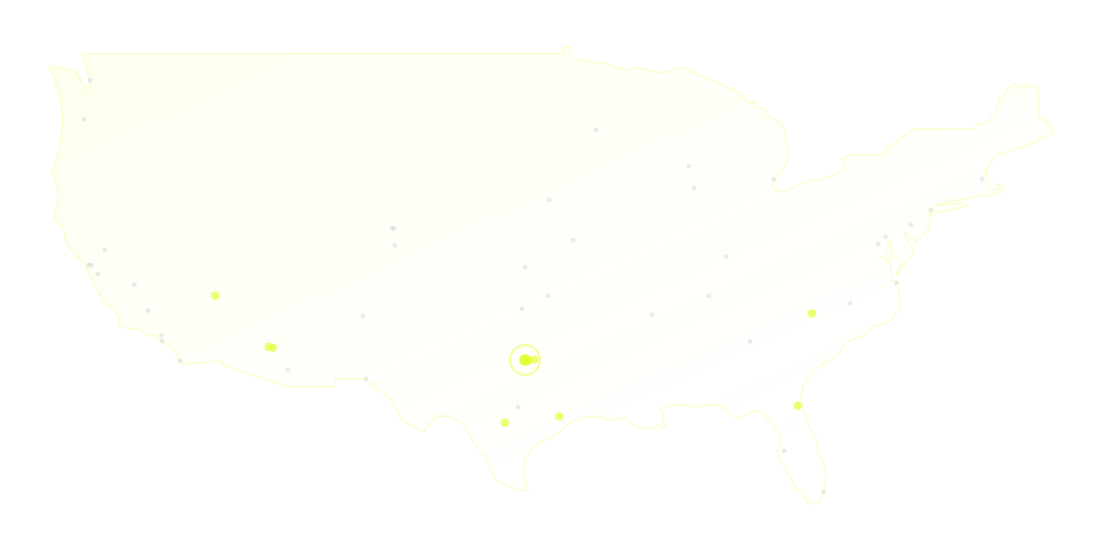
Fort Worth
80.02/ 100 score
Long working hours and early starts help put Fort Worth first. Its weekly commute totals 4 hours 40 minutes, about nine 30-minute workout windows.
Bespoke Fit ranked 50 major US cities to find where long commutes, working hours, early starts, poor sleep and limited park access put the most pressure on staying active.
Long working hours and early starts help put Fort Worth first. Its weekly commute totals 4 hours 40 minutes, about nine 30-minute workout windows.
Across five workdays, a commuter spends about 6 hours 46 minutes travelling to and from work, equal in duration to around thirteen 30-minute workouts.
Nearly one in two adults sleeps fewer than seven hours. Shorter workout windows may therefore be more realistic than sacrificing rest.
Its 36.6-hour work week is among the shortest, while only about one in nine workers leaves for work before 6:30am.
| Rank | City | Fitness Barrier Score | Commute, min | Working week, hrs | Under 7 hrs sleep, % | Early commuters, % | Park access, % |
|---|
Choose up to three barriers and get three simple ways to stay active.
Choose movements that suit your ability and available space. Stop if something feels painful or unsafe.
Simple ways to make movement easier to fit around work, travel and everyday responsibilities.
A five or ten-minute session can be easier to fit into a crowded day than waiting for a full workout window. Decide on a simple minimum in advance, such as a brisk walk, a mobility routine or one short bodyweight circuit.
When commuting already takes up part of the day, another journey can make exercise harder to start. Keep a no-travel option ready, such as walking near home or work, using the stairs or completing a short routine at home.
Use something that already happens each day as the reminder to move. Take a short walk after lunch, stretch when work ends or complete a few exercises while waiting for another regular task to finish.
One long workout is not the only option. Two shorter periods of walking, mobility or strength work may be easier to place around meetings, care responsibilities and changing evening plans.
Creating workout time by waking earlier or staying up later leaves less time for recovery. When sleep or energy is limited, choose a gentle walk, a short mobility session or rest rather than forcing a demanding workout.
Bespoke Fit gives members live 1-on-1 video personal training with a real coach, at home, in a gym or on the road.
Explore live coachingBespoke Fit’s research team analysed five factors that can make regular exercise harder to fit into everyday life across 50 major US cities: commuting time, working hours, insufficient sleep, early commuting and park access.
Average one-way travel time to work in minutes.
Average hours worked per week.
Adults sleeping fewer than seven hours per night.
Workers leaving for work before 6:30am.
Residents within a 10-minute walk of a park, reverse-scored.
Higher values received higher barrier percentiles for commute, working hours, insufficient sleep and early commuting. Park access was reverse-scored. The five percentile values were weighted equally and combined into a score out of 100.
The ranking covers 50 of the most populous US cities with sufficient data. Indianapolis and Columbus were excluded because of limited data and replaced with Arlington and Wichita. The latest available release was used for each metric, so reference years differ.
Commute, working hours and early commuting data came from the US Census Bureau. Insufficient sleep data came from CDC PLACES, while park access data came from the Trust for Public Land.
Study note: This ranking compares city-level conditions associated with finding time and opportunity for exercise. It does not estimate an individual resident’s free time, fitness level or exercise habits.